B R O Z E . N E T
Wat?
The development of the Internet and the World Wide Web was an amazing
journey. Finding historical links and understanding the progression of
the use of new technological innovations is so oftentimes beyond the
immediate understanding of newer, younger technologists.
This site aims to deliver a slice of history, and of appreciation of
practical form, in service of three distinct goals.
- Reveal how Markup languages in general were developed for communicating
information to an audience at once mesmerised and utterly
unequipped to comprehend.
- Provide a window into the evolution of technology in what would now be
described as "primordial" stages -- particularly by providing HTTP
over the TCP/IP framework in ways that computers from the early 1990s
could render for human understanding.
- Allow machines designed and built in the ten years leading up to
Netscape Navigator 3.0 to participate On-Line.
The hope is that by revealing these inventions and practices, generations
to come will have the opportunity to appreciate the true potential of
communications technology, from Claude Shannon's definition of the "bit"
and onward.
Technical Inspiration
- Broze.net hopes to provide an HTML-driven World Wide Web service
that meets the standards of HTML 2.0, as well as the capabilities
and limitations of Netscape Navigator 3 and comparable client apps.
- Services other than "WWW" will additionally be provided.
- While the backend is inspired by traditional (1990 - 1996) techniques,
broze.net is not beholden to period server-side configuration, build,
or deployment process.
- Idempotent server configuration is performed by Ansible. Nginx is used
to deliver content.
- The modus operandi is first to "make it quack like a duck,"
and second to back-port and downgrade until no technologies introduced
after Netscape Navigator 3 are required (roughly August 1996).
- Efforts will be made to ensure the site will render appropriately on
modern devices.
- It is hoped that period client technology, extending even back to
Tim Berners-Lee's initial system from 1990, will be able to render
the content provided here, with
suitable backward-compatibility measures taken.
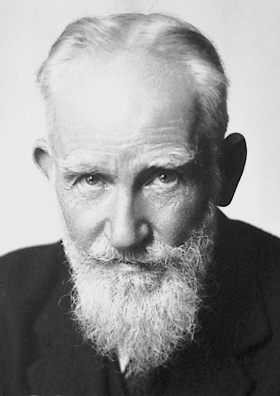
I hear you say "Why?" Always "Why?" You see things; and you say "Why?"
But I dream things that never were; and I say "Why not?"
[Back to Main]